
When ICE Lookup Applies
Use the official ICE Online Detainee Locator System only when facts point toward immigration detention. Relevant clues can include an ICE detainer, a transfer to ICE after release from Connecticut custody, an immigration arrest, contact with an Enforcement and Removal Operations office, or immigration-court paperwork. Routine East Hartford police arrests do not belong in ICE ODLS merely because a person has left a local record source.
Connecticut’s criminal custody path is distinct. East Hartford police can release a person at the station, send the person to court, or transfer custody after a remand. CT DOC operates Hartford Correctional Center, York Correctional Institution, and other state facilities. A state record may say released or transferred even while ICE holds the person next. In that limited situation, the end of CT DOC custody is not the same as release to the community.
Search ICE Detainee Status
USA.gov’s ICE locator instructions describe two search methods. The stronger route uses an A-number and country of birth. The biographical route uses name, country of birth, and birth date. An A-number is an immigration identifier, not a CT DOC number, BOP register number, East Hartford incident number, or state court docket number.
- Gather the person’s exact name, country of birth, and birth date.
- If known, use the A-number route and enter the country of birth.
- Otherwise use the biographical route and match the full name carefully.
- Read the status and any detention location exactly as displayed.
- If the search fails, check spelling, name order, hyphens, and the correct country.
- Use the listed facility or ICE contact path for confirmation when a result appears.
A name-only guess is weak. People may use more than one surname, and the order of family names can change the result. The country entry also matters. Do not substitute nationality assumptions for the country-of-birth field requested by the locator.
Note: The A-number route is more precise because it uses the immigration file identifier tied to the person.
ICE Custody Search Fields
The ICE locator’s fields identify a person and current or recent immigration detention context. They do not provide a Connecticut arrest report, criminal charge history, bond sheet, or full immigration case file.
| Search route | Information needed | Best use |
|---|---|---|
| A-number | A-number and country of birth | Most direct match when the identifier is known |
| Biographical | Name, country of birth, and birth date | Fallback when no A-number is available |
| Displayed result | Status and location shown by ODLS | Starting point for current ICE custody confirmation |
The federal instructions shown below document the two ICE search paths and the fields needed for each.
The federal ICE search instructions provide the two input routes pictured here.
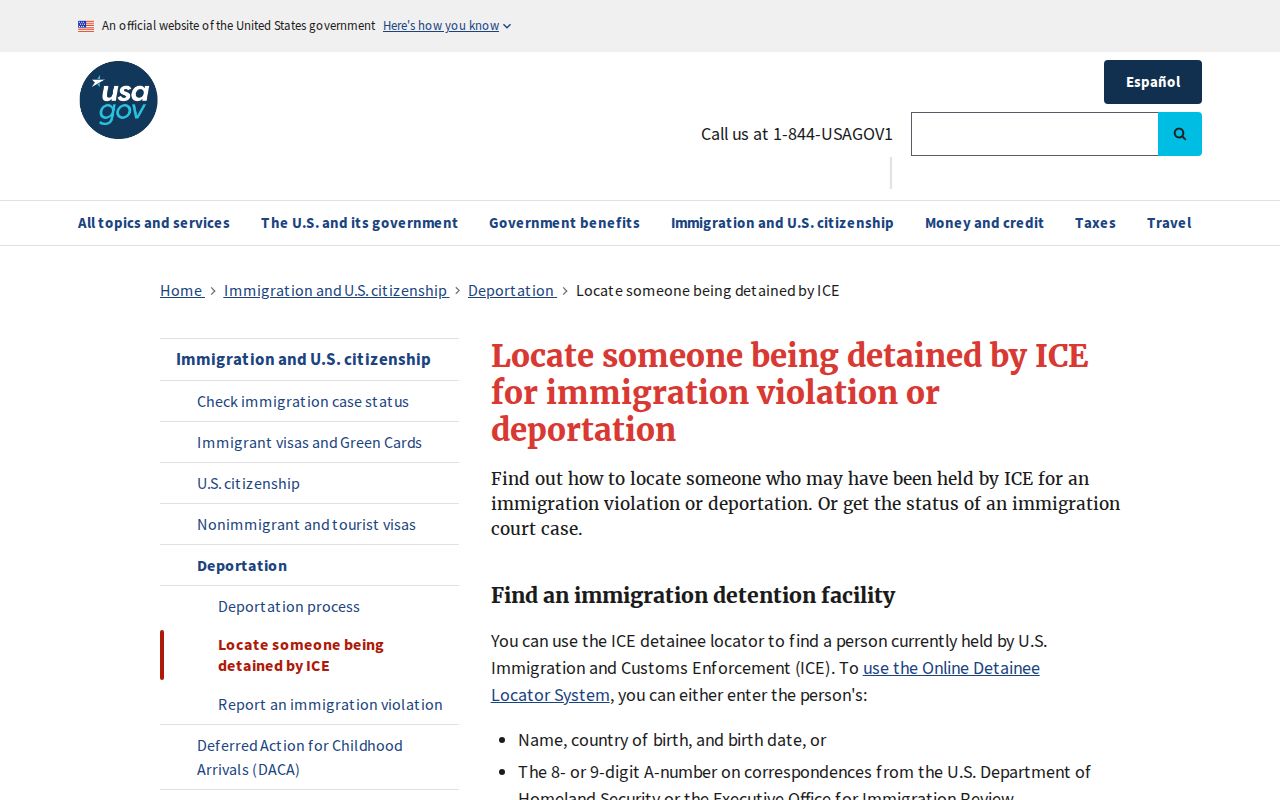
The image reinforces why the correct identifiers should be gathered before treating a blank result as evidence of release.
ICE Release Status Limits
ODLS is centered on ICE detention. Federal and legal-aid descriptions indicate that it may include some very recent release information, but it is not a permanent release archive. The live interface and current data rules control what is visible. A person who left ICE custody may later disappear or may show language such as not in custody. Preserve the exact message and date rather than replacing it with a broader conclusion.
A blank search does not prove that ICE never detained the person. It also does not prove present freedom from every authority. The record may not match because the inputs are wrong, the person is outside the locator’s covered group, the feed has not updated, the person moved, or the release is beyond the visible window. Official release proof may come from ICE paperwork, an immigration court record, counsel, or the responsible ERO office.
- Detainer
- A request or notice related to possible transfer to immigration custody.
- A-number
- The immigration file number used to identify a person in federal immigration records.
- ERO
- ICE Enforcement and Removal Operations, which manages immigration detention and related enforcement.
- Transfer
- A change in the authority holding the person, not always a community release.
CT DOC to ICE Transfer
A state-to-federal immigration transfer creates two records with different meanings. CT DOC may report the end of its custody or a release/transfer date. ICE ODLS may then report immigration detention. Both can be accurate at the same time because the person left one authority and entered another.
Start with the last confirmed event. If a CT DOC result or facility record points to an immigration hold or outside transfer, search ODLS with the A-number when available. If ODLS shows a location, contact that detention facility or ICE through the official channel shown. If ODLS shows no match, review personal release paperwork, the court case, and immigration documents before assuming the person entered the community.
| Record says | What it establishes | Next check |
|---|---|---|
| Released from CT DOC | State correctional custody ended | Transfer destination, court, or ICE if supported |
| Located by ODLS | ICE reports detention context | Facility or ERO confirmation |
| Not in ICE custody | Current interface does not report ICE custody | Release paperwork or immigration record |
| No match | The entered search did not return a record | Correct identifiers and source-specific follow-up |
Note: A release from one agency can be a transfer to another, so always identify the stated destination.
East Hartford ICE Boundaries
The East Hartford weekly arrest report is not an immigration custody source. It lists local arrest and court details but does not show an ICE hold, release time, DOC destination, or later custody status. East Hartford Police Records may be able to provide public transfer or release paperwork tied to an incident. The Connecticut court case may show bond and criminal disposition, but immigration proceedings follow a separate federal process.
CT DOC inmate information is the correct first search when a Connecticut court remanded the person. The BOP locator is for a federal prison sentence, not ICE civil immigration detention. VINE is a participating-agency notification service, not a substitute for ODLS. The East Hartford released-inmate search path separates these sources by custody type so that a person is not incorrectly searched as an ICE detainee without a factual basis.
No public East Hartford or Hartford County immigration release feed was found in the research. There is also no local sheriff jail roster because Connecticut does not use an active county jail system here. That local structure makes the source decision especially important.
Confirm ICE Release Records
When ODLS shows a location, use the facility or official ICE contact tied to that result. Ask about communication and record procedures, not about facts the public locator does not establish. When it shows recent release language, save the exact wording and seek the individual’s immigration release document if formal proof is needed.
Immigration court records can address proceeding status, but they do not always function as a detention-release certificate. Counsel may be needed when a case, bond order, removal order, or release condition is unclear. Personal paperwork is often the most direct source for the authority and terms of an ICE release.
The sound sequence is narrow: establish a reason to suspect ICE custody, search with correct identifiers, read the live result without overstatement, and verify through the responsible federal channel. That method keeps ICE ODLS in its proper role rather than turning it into a routine search for every East Hartford release.
ICE Release Follow-Up
ODLS can omit a useful public result for reasons the East Hartford police desk cannot resolve. Local Police Records manages town arrest and transfer records, not the federal immigration database. When the known trail ends with a transfer, request the public destination notation from the releasing agency and use that fact to choose the next federal contact.
A focused follow-up should include the correct name, A-number if known, country of birth, birth date, last reported detention site, and approximate dates. Keep criminal and immigration case numbers separate. They belong to different systems and may lead to different offices even when the detention events occurred close together.
If personal paperwork shows release conditions, preserve the document and issuing office. ODLS may help with present or recent detention context, but the release document is better evidence of the authority, date, and terms applied to that person. Current questions should go to the office named on the record.
When a later search changes, compare it with the saved ODLS result and the release document instead of assuming one source was false. Immigration detention data can update as a person moves or leaves custody. The official paperwork and responsible federal office provide the clearest record of the event and its conditions.