
East Hartford Parole vs Probation
Connecticut uses separate authorities for these forms of supervision. The Connecticut Board of Pardons and Paroles makes parole decisions for eligible state prisoners, while CT DOC carries the state custody and community-supervision record. Probation is a court sentence supervised through the Connecticut Judicial Branch Court Support Services Division. An East Hartford arrest may end in probation without a CT DOC prison release. Conversely, a person leaving Hartford Correctional Center or another state institution may enter parole or special parole.
Read the court judgment and agency record rather than guessing from the fact that someone is out. “Conditional discharge” is another court term and is not the same as parole. A suspended sentence may include probation. Release on bond means the case remains pending under court conditions, but it does not make the person a parolee.
| Status | How it begins | Best verification source | How it ends |
|---|---|---|---|
| Parole | Board grants conditional release from a prison term | BOPP hearing/record and CT DOC | Discharge, expiration, revocation, or other Board action |
| Special parole | Court imposes a term after incarceration | Court judgment, CT DOC, and Board records | Term expires or changes through lawful action |
| Probation | Court orders community supervision | Criminal case and probation office | Court discharge, term completion, or violation action |
| Bond release | Court or police permits release before case ends | Bond paperwork and docket | Case action or bond change |
- Parole
- Conditional release from a state prison sentence under Board authority.
- Probation
- Court-ordered community supervision that need not follow prison.
- Special parole
- A court-imposed supervision period served after incarceration.
- Absconder
- A person alleged to have stopped reporting or left supervision without permission.
- Discharge
- The recorded end of custody or supervision.
Verify East Hartford Post-Release Supervision
Start with the case that produced the status. East Hartford’s weekly adult arrest log supplies an incident number and court date, but it does not display probation or parole. The Judicial Branch criminal case can show a probation sentence, suspended sentence, conditional discharge, or violation-of-probation event. CT DOC and the Board are the stronger path when a state prison sentence preceded release.
- Confirm the full name, date of birth, arrest date, and court date from reliable records.
- Check the Connecticut criminal case for the judgment, sentence, probation term, or pending bond status.
- Search CT DOC Inmate Information for state-custody status and any displayed community-supervision notation.
- Review the Board hearing page and event-calendar path when parole, revocation, rescission, or early termination is at issue.
- Ask the Board or probation office for confirmation when public entries are incomplete.
- Keep the agency’s exact term. Do not turn a hearing, eligibility date, or pending review into a release decision.
No East Hartford-only parole database or public probation absconder list was located. Supervision is managed through state systems even if the person lives in town. The East Hartford released-inmate search path explains how to connect police, court, CT DOC, and release records when the custody history is uncertain.
Connecticut Board Release Records
The Connecticut Board of Pardons and Paroles is headquartered at 55 West Main Street, Suite 520, Waterbury, CT 06702. Its main number is 203-805-6605. The Board site links parole information, current hearing streams, and a public meeting calendar. Members of the public may request hearing copies through Freedom of Information at BOPPFOI@ct.gov. Include the person’s name, CT DOC number if known, hearing date, and requested record type.
Connecticut Board of Pardons and Paroles
55 West Main Street, Suite 520
Waterbury, CT 06702
203-805-6605
BOPPFOI@ct.gov for hearing-copy requests
The Board page is a hearing source, not a single searchable database of all decisions by offender name. Public routes include the hearing page, event-calendar entries, CT DOC and court data, official recordings where posted, and an FOI request. Possible actions include grant, denial, deferral, continued review, rescission, revocation, or early termination. Use the label shown on the actual record.
Connecticut’s parole information page displays the Board’s current resource and conditions links.
The page helps separate general parole rules from the decision and supervision records for one released person.
East Hartford Parole Hearing Details
Connecticut posts live links for scheduled Board hearings. The hearing page says proceedings begin at 9 a.m. unless another time is posted. The research review on July 14, 2026 showed links for July 14 and July 15 and included revocation and early-termination reviews. Those examples show that the page changes with the live calendar; they are not permanent proof of one person’s status.
The Board warns that viewers may not record its livestreams. Connecticut General Statutes Section 1-226 bars recording, screenshots, and screen captures of streamed proceedings apart from the Board’s official recording. A requester who needs a hearing copy should use the Board’s FOI channel instead. A hearing schedule is evidence that a matter is set for review, not evidence that parole was granted or that a person has already left custody.
The official Board hearing page shows how public viewing and live scheduling are presented.
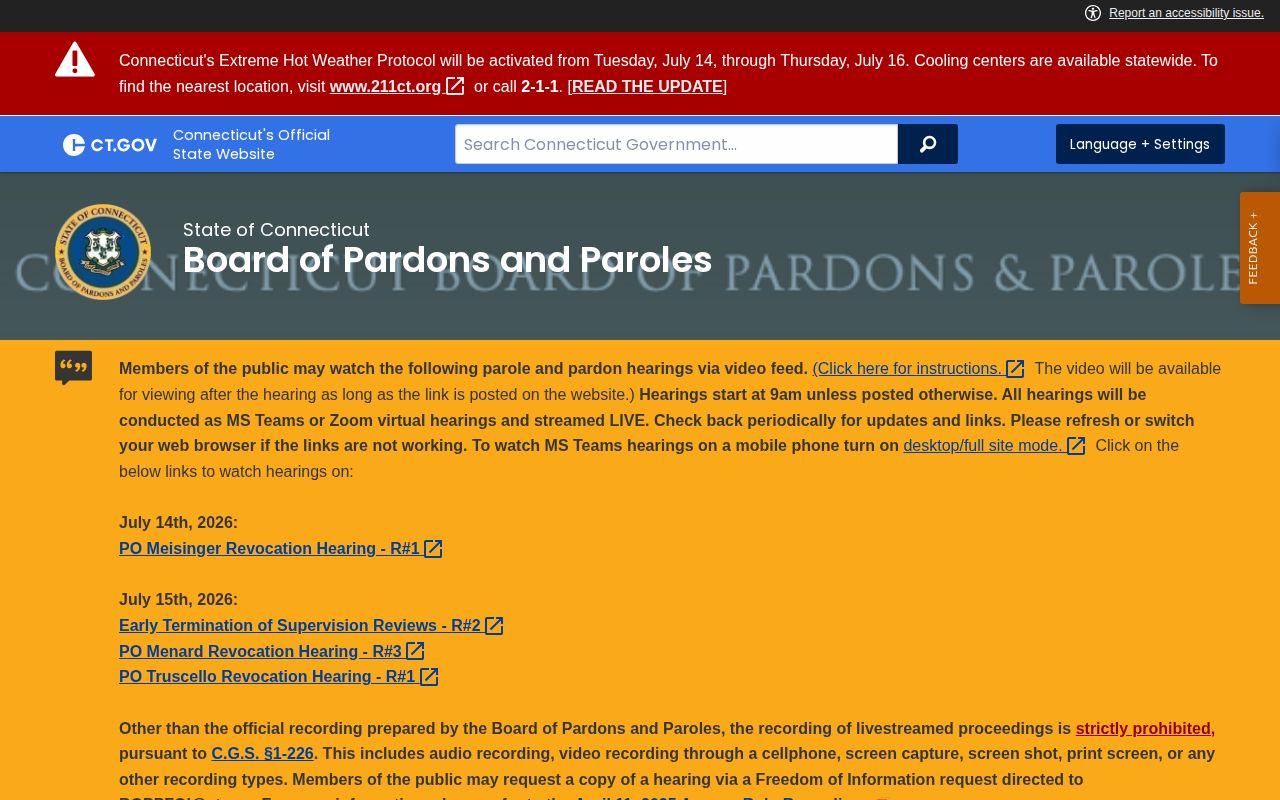
Use the live page for the current calendar, then request the official record if the outcome is not otherwise available.
East Hartford Supervision Violations
Conditions depend on the sentence and release order. They can address reporting, travel, treatment, contact, residence, or conduct, but the individual order controls. A violation allegation may lead to a probation warrant or court case, a parole revocation or rescission hearing, or a return to custody. It is not safe to infer a violation merely because a person is missing from a public result.
Connecticut law includes a route for information on outstanding probation-violation warrants in Section 54-108c. The criminal docket may show a violation-of-probation matter or rearrest warrant. Board pages may show revocation or rescission review for parole cases. An absconder is someone alleged to have stopped reporting or left supervision without approval. That label should come from the supervising authority, not from a missed appointment reported by a third party.
A warrant or revocation hearing can change custody quickly. Confirm the current court, CT DOC, and VINE status before relying on an older supervision entry.
East Hartford Parole Eligibility Rules
Parole eligibility is not the same as parole release. Under Connecticut General Statutes Section 54-125a, many eligible people serving more than two years may be considered after one-half of the total effective sentence, less qualifying risk-reduction credit. Some offenses are excluded, and certain violent or listed offense categories require at least 85 percent of the definite sentence before parole eligibility. The Board still decides suitability.
Special parole conditions and violations are addressed in Section 54-125e. Revocation and rescission hearings appear in Section 54-127a, while Section 54-129 concerns discharge of paroled prisoners. These provisions explain why a projected date, eligibility point, hearing date, and discharge date can all differ. A denial or deferral leaves the sentence in force. A grant may still depend on an approved plan and the effective release action.
East Hartford Probation Record Path
Probation begins in the court record. An East Hartford defendant can receive probation after a conviction without ever serving a state-prison term, so CT DOC may not contain the answer. Search the criminal case for the sentence, term, suspended portion, conditional discharge, and later violation entries. Court Support Services Division, not the parole board, administers probation.
When a public docket does not give enough detail, contact the court or the probation office linked to the case. Manchester Superior Court is a central court path for East Hartford matters, but the docket controls the correct venue. Ask about public record access, not about private case counseling. If a released person also served a CT DOC term, compare the court judgment with DOC’s discharge and supervision notation.
East Hartford Release ID Help
CT DOC Offender Re-Entry Services documents what happens to identification after discharge. An ID brought into custody is held separately. If it is not collected at discharge, it stays at the discharging facility for 30 days, then moves to DOC Central Office in Wethersfield for up to two years. This practical record can help a released person reconnect with a vital document.
Use Offender Re-Entry Services or call 860-692-6836 or 860-692-7869. Questions may also go to DOC.ORSU@ct.gov. Provide the person’s name, DOC number if known, last facility, and discharge date. The official source shown below presents the state’s post-discharge ID and property guidance.
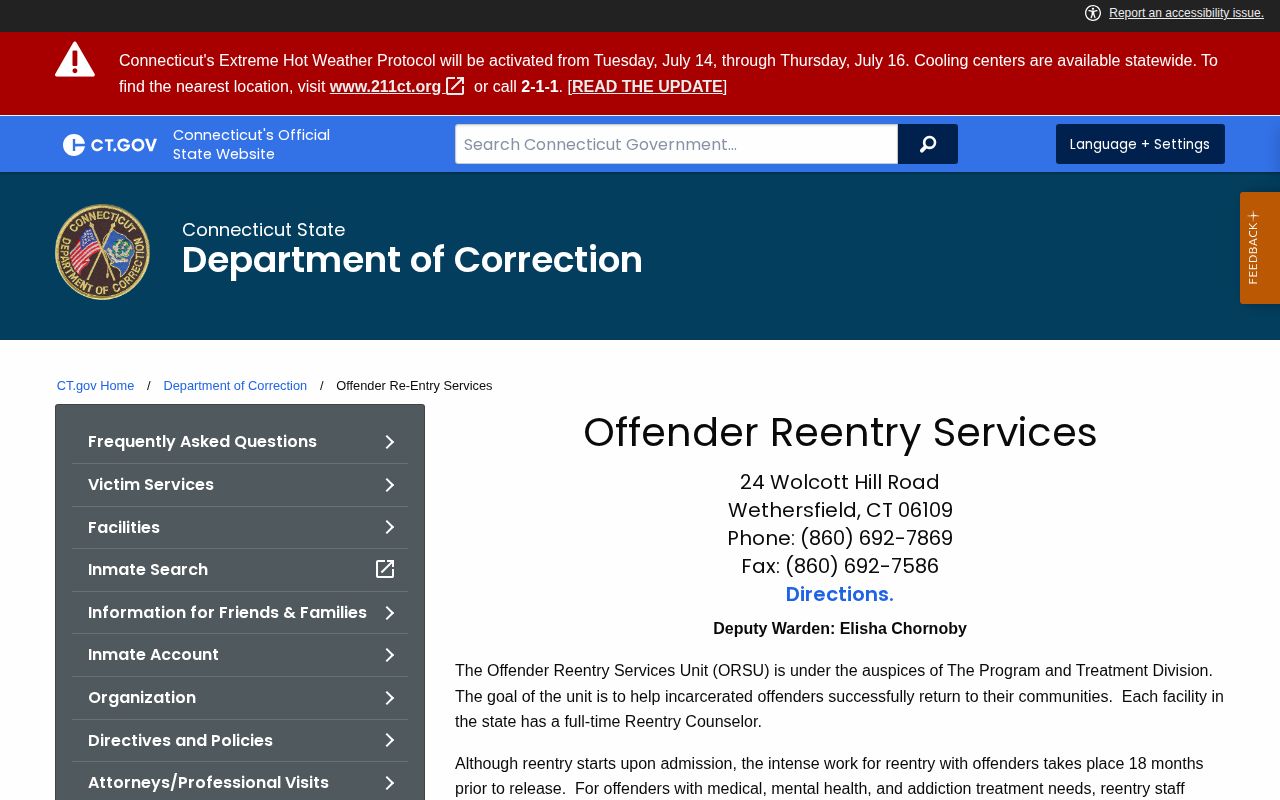
This channel concerns stored identification after discharge; it does not replace the court or supervision record.
East Hartford Supervision Discharge
Supervision ends through an official action or the lawful expiration of its term. A Board record can document discharge from parole, early termination, revocation, or another parole outcome. A court record can document completion or change of probation. CT DOC can hold related state-custody and supervision information. The final status should be taken from the authority that imposed or administered the term.
A person who finished supervision should no longer be described as currently on parole or probation merely because an older docket or hearing appears online. Check the most recent entry and request the discharge record when the end date matters. Erasure or sealing rules may later limit public access to qualifying court records, but they do not authorize reconstruction from unofficial sources.
Note: Public hearing links and custody results can change after an agency update, so preserve the date and exact wording of any record used.